Validated Components
Findings, algorithms, data boundaries, and evidence lineage.
Build applications around real business questions. Put classical and quantum capabilities to work behind them.
Quantum Forge is designed to package discovery methods, computation, and sovereign controls into reusable services. Developers compose them. Regional partners deliver them. Customers use them.
 LEARN MOREHow does quantum discovery become a service?What you’re seeing. What’s different. Why it matters to you.
Your customer buys a useful investigation. Your expertise becomes the offering.
A customer gains access to quantum-assisted discovery without building a quantum laboratory. A midmarket company can create a service around its expertise and existing customer relationships. Local delivery and agreed data boundaries make that opportunity practical; a scoped pilot tests the result, cost and evidence before expansion.
Quantum Forge is a decentralised, distributed Quantum as a Service (QaaS) marketplace and partnership model. Participating resources supply computation; data owners and regional operators retain their authority. A partner combines customer knowledge and authorised evidence with shared quantum and classical discovery capabilities.
Direct access to a quantum processor leaves the customer to assemble the investigation and interpret its results. Forge connects those capabilities to an application, regional delivery and support. The public catalogue also introduces preliminary QCU prices so partners can test an offering’s economics alongside its usefulness.
A service definition: the customer’s problem, supported resources, data boundaries, result, delivery responsibilities and a price to test. A preliminary QCU quote remains separate from evidence that work was completed and useful.
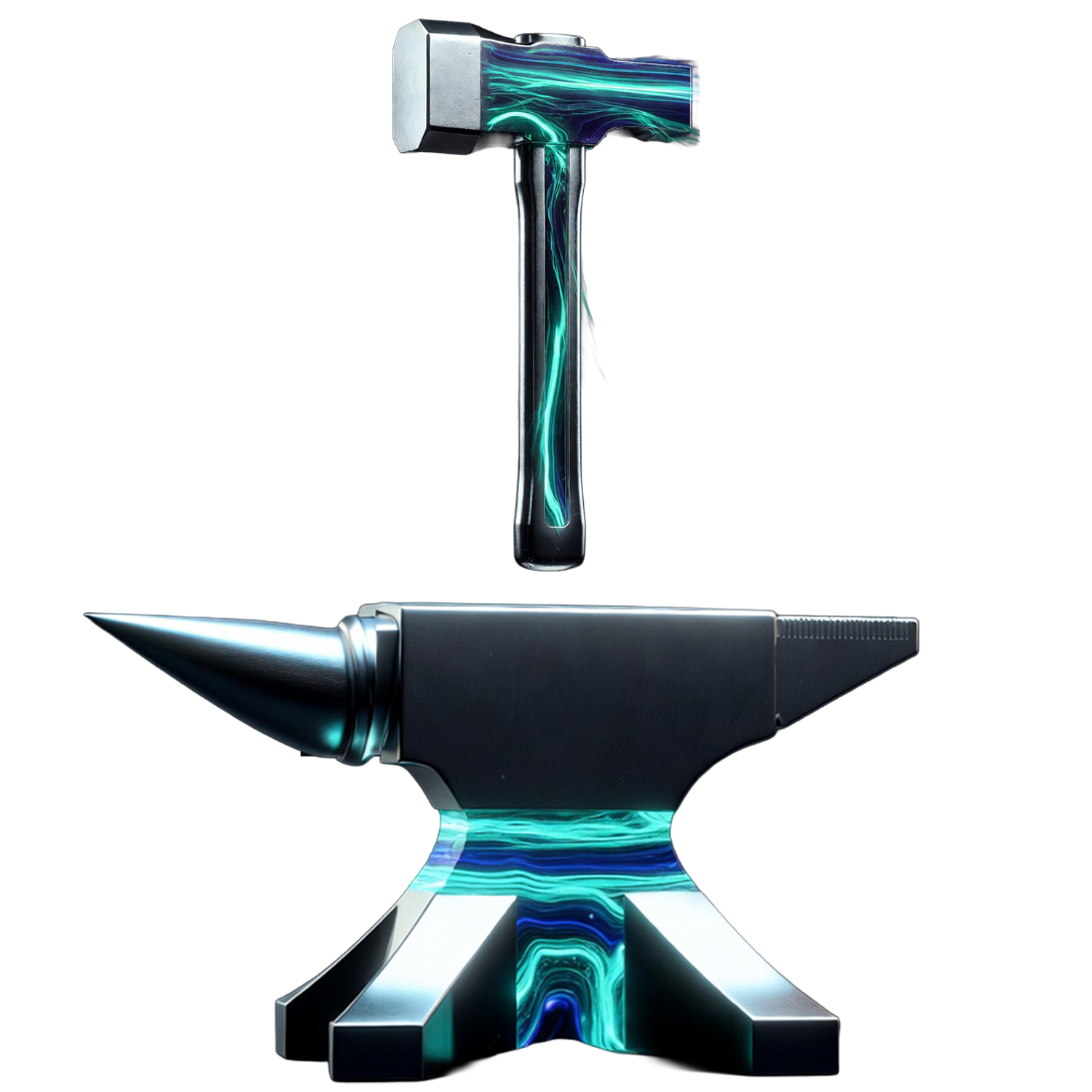
The application and service layer designed to make quantum-assisted discovery usable through sovereign regional delivery.
Quantum as a Service gives applications access to quantum capabilities through managed services. Quantum Forge is designed to compose those services with classical computing, discovery methods, authorised data, and sovereign controls. Developers build the application, regional partners deliver it, and customers investigate new evidence without managing the underlying QPU workflow themselves.
Findings, algorithms, data boundaries, and evidence lineage.
Composable AI, CPU, GPU, QPU, and hybrid execution instruments.
Identity, policy, custody, regional deployment, metering, and proof.
Licensed applications that customers can deploy, purchase, and measure.
Compare the application with an appropriate classical baseline: useful findings, review effort, execution cost, and time to an actionable result. Quantum advantage must be demonstrated for the workload. Service value and quantum advantage are measured separately.
What should the customer be able to investigate or improve?
Which data, discovery methods, and reusable services fit the problem?
Which CPU, GPU, QPU, or hybrid workflow fits the task and its constraints?
Where and how may the application run for this customer?
What did the customer learn, and what evidence supports it?
In the lake’s authored example, a 15% fall in lumber futures opens a path to homebuilding and D.R. Horton. Quantum Forge could package that investigative capability into a material-exposure application that examines fresh customer evidence each time it runs.
An authorised user supplies material exposure, purchase dates, contract terms, and the question they need to investigate.
The application compares qualified observations, investigates material-to-industry relationships, and checks whether purchasing commitments change the interpretation.
An evidence-linked review identifies candidate exposures, timing assumptions, conflicting clues, and unresolved questions for a person to assess.
You do not need to know which quantum circuit to run. You need to know what business problem deserves investigation.
Illustrative application concept, not a live offering or earnings forecast. A useful discovery lead still needs evidence and causal investigation before supporting an explanation.
See the discovery in the 3D trellis and Data LakeManufacturers, distributors, service providers, and other midmarket businesses have valuable data and real operational questions. The Quantum Forge model lets a regional partner assemble an application around that need using shared discovery and computational services.
Bring the problem and authorised evidence. Use findings through a workflow your team can understand, with regional support and clear limits.
Combine classical and quantum services, discovery methods, identity, and evidence handling without rebuilding every infrastructure layer.
Contribute local relationships, industry knowledge, deployment planning, support, and agreed commercial terms around the shared technology foundation.
The business uses the application. The partner delivers the service. Quantum Forge supplies the composition layer.
Explore the regional partnership model Become a regional partnerDiscover, license, purchase, and deploy applications assembled from governed QaaS components.
Compose and publish QaaS applications without rebuilding the sovereign stack.
Combine quantum access, hybrid compute, workloads, authority, metering, and proof as reusable services.
Route each workload to the compute instrument that its evidence requires.
Investigate new evidence repeatedly while preserving source lineage, qualification, and the history of findings.
Deploy according to regional authority, custody, and infrastructure constraints.
Bind deployment, delivery, and measured outcomes to attributable receipts.
Give regional partners a governed path to publish and commercialize services.
Connect customer access, commercial terms, metering, and billing.
Measure whether quantum-assisted discovery improves on the best classical result.
Availability: this page describes the Quantum Forge service model. Marketplace publishing, purchasing, deployment, billing, and outcome integrations remain planned. Application scope, supported services, regional availability, and commercial terms require confirmation.
The regional model combines sovereign infrastructure, regional distribution, Quantum Forge, governed applications, CPU/GPU/QPU access, and local customer relationships. Regional partners contribute jurisdictional knowledge, procurement, sales, support, language, and customer trust.
 View our Global Diamond Distribution PartnerTrading NationsExplore all 16 regions, regional companies and their coverage on our interactive map.View the global distribution map
North America
HQ · Austin, TX
Asian Pacific
HQ · Singapore
Commonwealth Realms
HQ · London, UK
Northern South America
HQ · Panama City
Andean South America
HQ · Lima, Peru
Caribbean South America
HQ · St. John's, AG
Eastern South America
HQ · Florianopolis, BR
Southern South America
HQ · Buenos Aires, AR
MENA
HQ · Abu Dhabi, UAE
Western Africa
HQ · Dakar, Senegal
Eastern Africa
HQ · Port Louis, MU
Central Africa
HQ · Libreville, GA
Southern Africa
HQ · Gaborone, BW
Europe
HQ · Zurich, CH
Central Asia
HQ · Tashkent, UZ
Indian Region
HQ · Mysore, INRegional participation can broaden the evidence and application experience available for improvement, where policy permits.
Evidence about system behaviour, transitions, performance, infrastructure, and regional interaction.
Governed workloads, execution choices, deployment patterns, delivery, and measured outcomes.
Validated relationships, classical baselines, quantum-assisted findings, and Discovery Lift results.
Compare under equivalent evidence constraints. If quantum adds no statistically meaningful value, say so.
Define the customer, the evidence, the regional requirements, and a measurable outcome. Together, those establish a concrete application opportunity.
Discuss your application